
AI Needs a Purpose, Not a Name
Somewhere along the way, businesses started talking about AI agents like they were new hires.
They are not.
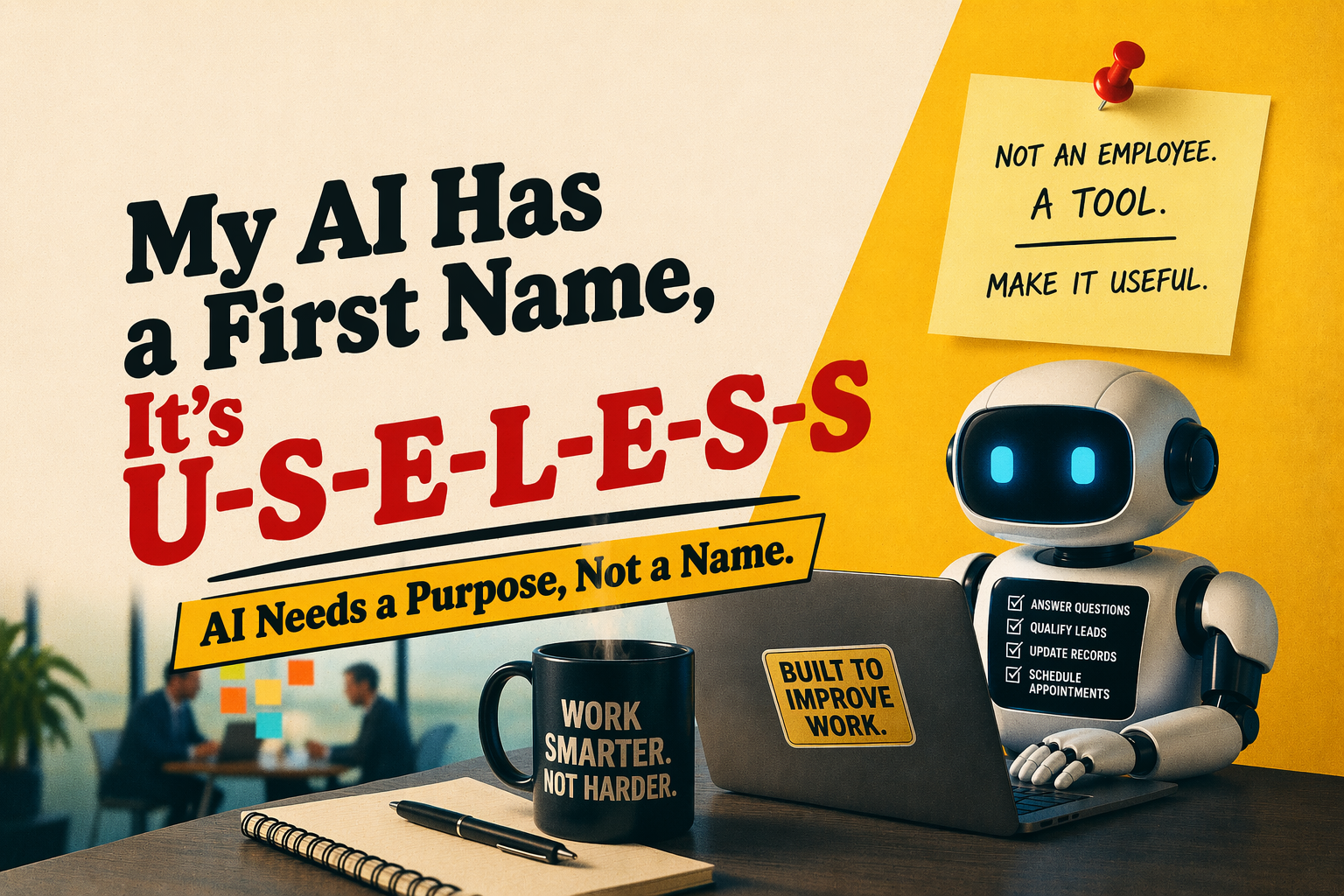
They are not your newest team member. They are not your digital coworker. They do not need a cute name, a fake personality, or a spot on the org chart next to Linda in accounting. They are tools. Useful tools, when implemented correctly. Expensive distractions, when they are not.
That distinction matters.
A lot of the hype around AI has pushed companies toward the wrong conversation. Instead of asking, Where can this improve speed, consistency, and output? Too many leaders are asking, What should we name it? That is how you end up with a chatbot named “Max” that cannot answer basic customer questions but somehow has a brand voice guide.
Sounds very impressive. But it’s very useless.
The smarter approach is much simpler. AI agents should be treated the same way you treat any other business software. You do not name your CRM. You do not introduce your scheduling tool at the company picnic. You use those systems because they help people work faster, stay organized, and produce better results.
That is exactly where AI agents belong.
At their best, AI agents help employees eliminate repetitive tasks, reduce response times, improve consistency, and keep work moving without bottlenecks. They can answer routine questions, qualify leads, route calls, follow up with prospects, summarize conversations, update records, schedule appointments, and handle the administrative work that eats up the day.
None of that means humans are no longer important. It means humans can stop wasting time doing work that software can handle more efficiently. That is not a replacement strategy. That is common sense.
This is especially important for small businesses. They have fewer people, tighter budgets, and a lot less room for inefficiency. When paid staff are stuck answering the same questions, chasing routine follow-ups, or handling tasks that could be automated, they are not spending time on the work that actually drives growth.
That is where AI can make a real difference.
It helps small businesses refocus employees on revenue-generating activities like selling, building relationships, solving higher-value problems, and serving customers better. Same headcount. More revenue.
That is the opportunity.
The real value of AI is not in pretending it is human. It is in improving processes so your actual humans can do more valuable work. A well-designed AI agent handles the repetitive layer and supports the team behind the scenes. It gives employees cleaner information, faster handoffs, and fewer administrative headaches.
Businesses getting results are not treating AI like a novelty. They are treating it like infrastructure.
So no, your AI agent does not need a name.
It needs a purpose.
To learn how to implement AI and improve business outcomes, contact BetterBiz at morsell.allison@betterbizgroup.com.