
Housing authorities do not have a technology problem. They have a capacity problem.
Teams are stretched thin. Phones ring nonstop. Residents need answers. Vendors need coordination. Recertifications, inspections, reminders, follow-up, and emergency notices all compete for attention at once. Most agencies are not struggling because staff are not working hard enough. They are struggling because too much of the day is consumed by repetitive communication and manual follow-up.
That is where AI can actually help.
Not in the overhyped, replace-your-team sense. In the practical sense. The kind that reduces call volume, improves response times, creates cleaner workflows, and gives staff more time to focus on the issues that actually require judgment and care.
We have already looked at two of the most immediate opportunities: after-hours maintenance request intake and Section 8 information hotlines. If you want to see what that looks like in practice, read the Linden Housing Authority case study. Those are often the easiest entry points because they address high-volume, repetitive interactions right away.
But they are only the beginning.
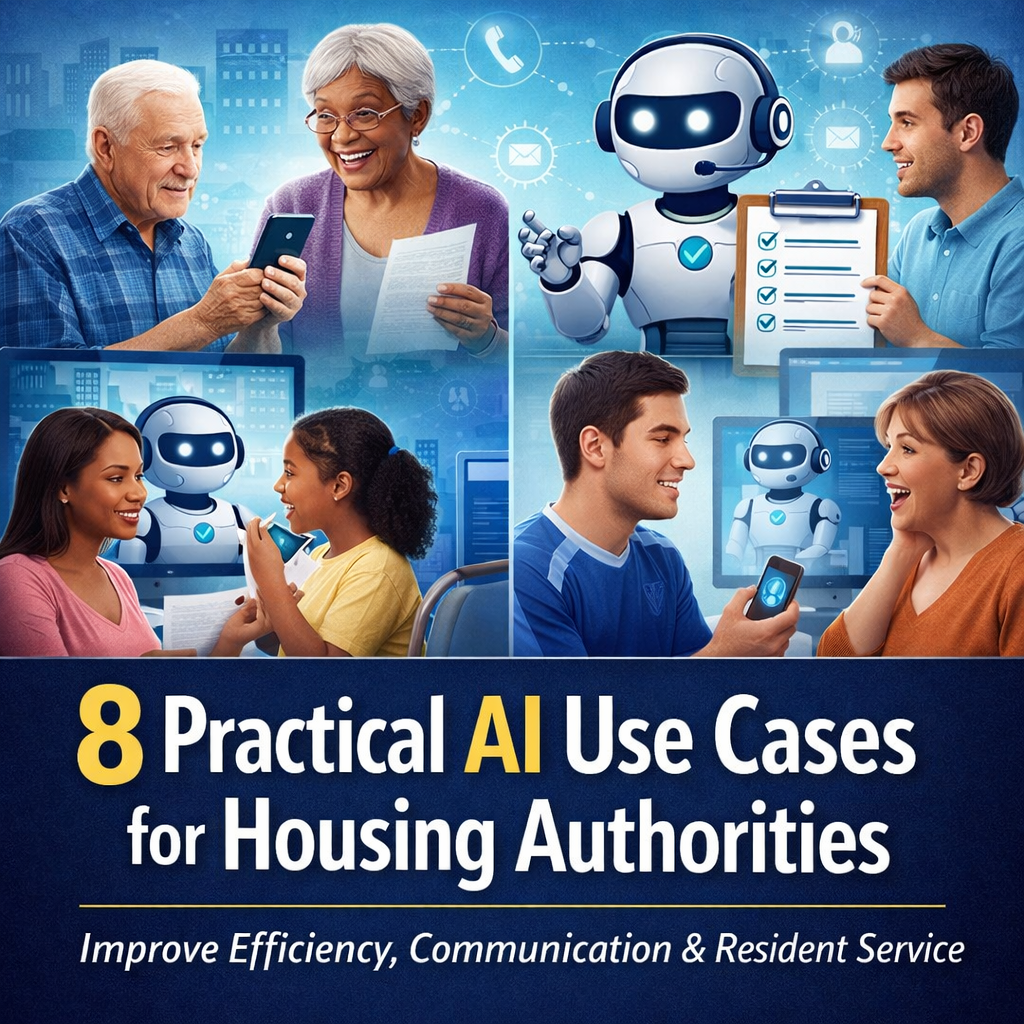
Here are eight additional use cases where AI can help housing authorities improve service, reduce operational drag, and bring some much-needed order to the daily scramble.
1. Inspection scheduling and reminders
Inspection workflows break down more often than they should for a simple reason: too much depends on manual follow-up.
Appointments get missed. Reminders go out late or not at all. Staff end up spending time rescheduling, chasing confirmations, and cleaning up no-shows that could have been avoided in the first place.
AI-supported workflows can automate appointment reminders by phone or text, confirm attendance, prompt rescheduling, and alert staff when a situation needs human intervention. The result is fewer missed inspections, less back-and-forth, and a process that feels far less fragile.
2. Rent payment reminders and delinquency outreach
This is one of those areas where consistency matters more than flash.
Many missed payments start with confusion, forgetfulness, or a resident who is already behind and unsure what to do next. When outreach is inconsistent, the issue becomes harder to manage for everyone involved.
AI can help housing authorities send timely reminders, provide clear payment instructions, and flag situations that need a live follow-up. Used well, this does not make the process colder. It makes it clearer, earlier, and more consistent.
3. New applicant and waitlist inquiry handling
If there is one thing housing authorities do not need more of, it is staff answering the same application questions all day.
Applicants want to know whether the list is open, how to apply, what documents are required, and what happens next. Those are important questions, but they are also highly repetitive.
A voice or chat assistant can handle first-line inquiries, explain basic steps, collect contact information, and direct people to the right next action. That gives applicants faster answers and gives staff more room to deal with the cases that actually need personal attention.
4. Recertification reminders and document follow-up
Recertification delays are rarely caused by one big problem. More often, they come from a pileup of small ones: missed notices, missing documents, unclear instructions, and follow-up that never quite catches up.
This is exactly the kind of repetitive process where AI can be useful. Automated reminders, checklist-based prompts, and follow-up messages can help residents stay on track while alerting staff when extra support is needed.
It is not glamorous, but it is practical. And practical wins.
5. Front-desk overflow and call screening
In many housing authorities, the front desk ends up functioning like a switchboard, triage center, and FAQ line all rolled into one.
Calls come in for maintenance, inspections, forms, office hours, landlord questions, resident issues, and requests that belong somewhere else entirely. Staff spend too much time sorting and rerouting instead of solving.
An AI receptionist can answer routine questions, collect key information, and send urgent or high-priority matters where they need to go. It does not remove the human layer. It protects it from being buried under avoidable interruptions.
6. Outage, emergency, and property alert notifications
When there is a water shutoff, a weather closure, a boiler issue, or another urgent property matter, slow communication creates unnecessary chaos.
Residents want fast, clear information. Staff want fewer inbound calls asking the same question fifteen different ways.
AI-supported alert workflows can send outbound voice and text notices quickly, keep messaging consistent, and create a record of what was sent and when. In an emergency, that kind of clarity is not just convenient. It is operationally critical.
7. Vendor and contractor coordination
Housing authority staff often end up stuck in the middle of vendor communication, chasing updates, confirming visits, and trying to keep everyone aligned.
That is a lot of administrative motion for work that should move more cleanly.
AI-supported workflows can send reminders, collect status updates, log progress, and notify staff when an issue needs attention. That means fewer dropped handoffs, better visibility, and less time spent playing phone tag with contractors.
8. Resident satisfaction and service follow-up
One of the easiest things to lose in a busy operation is the final step: checking whether the issue was actually resolved.
A repair may be completed. A question may be answered. An inspection may be done. But without follow-up, housing authorities lose visibility into whether the resident still has a problem or whether something slipped through the cracks.
AI can automate simple follow-up outreach and surface the exceptions that need staff review. That helps agencies close the loop more consistently and build trust through better service recovery.
The real value is not automation for its own sake
The strongest housing authority use cases for AI all have one thing in common: they reduce repetitive strain.
That is the point.
The goal is not to automate everything in sight. The goal is to remove the avoidable bottlenecks that eat up staff time, delay communication, and make service harder to deliver consistently.
For most housing authorities, the question is not whether there is enough work to justify better systems. The question is which workflow is causing the most friction right now.
That may be inspections. It may be recertifications. It may be applicant questions, front-desk overflow, emergency alerts, or vendor coordination.
Start there.
The best early wins usually come from workflows that are repetitive, predictable, and currently consuming too much human time. That is where automation starts to feel less like a tech experiment and more like operational relief.
A smarter next step for housing authorities
Housing authorities do not need more software for the sake of having more software. They need practical tools that help staff stay responsive, organized, and focused on the work that matters most.
After-hours maintenance intake and Section 8 information lines are two of the clearest starting points, and we covered those in the Linden Housing Authority case study. But the opportunity is much broader. Inspection reminders, applicant inquiries, recertification support, front-desk screening, emergency alerts, vendor coordination, and resident follow-up all offer meaningful ways to improve operations without sacrificing the human side of service.
If your team is spending too much time answering the same questions, chasing the same updates, or patching the same communication gaps, it may be time to rethink the workflow instead of asking staff to push harder.
Want to explore how this could work for your housing authority? Contact BetterBiz at info@betterbizgroup.com to discuss where AI can reduce call volume, streamline resident communication, and support your team without adding more complexity.